
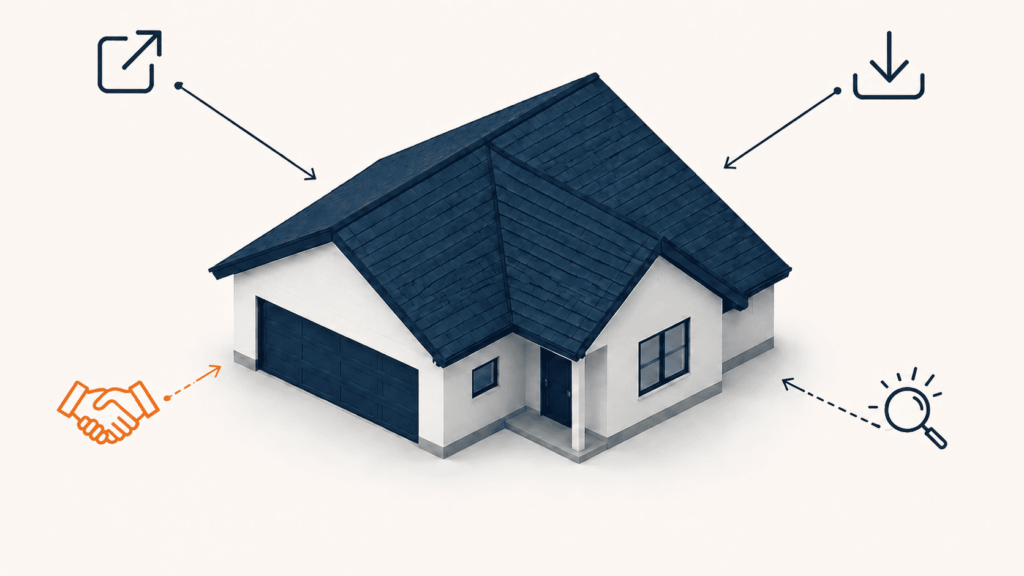
This might shock you, but there are only four ways to generate roofing leads.
Yes, only four.
Every lead generation strategy you have ever used door knocking, cold calling, Google Ads, SEO, referrals, direct mail or social media fits into one of these four categories.
Understanding this can completely change how you spend your marketing budget.
I recently spoke with a business owner spending between $30,000 and $35,000 every month on marketing. When I asked what results the company was receiving, there was no clear answer. The owner simply knew the results were terrible.
But because the company desperately needed more leads, it kept writing bigger checks.
Another large company I spoke with was spending almost $600,000 per year on marketing. Yet its leadership couldn’t accurately explain which campaigns generated qualified leads, booked appointments or closed roofing jobs.
That isn’t marketing. That is gambling.
Once you understand the four types of roofing leads, you can identify what is working, stop wasting money and build a more predictable roofing lead generation system.
1. You Go to Them
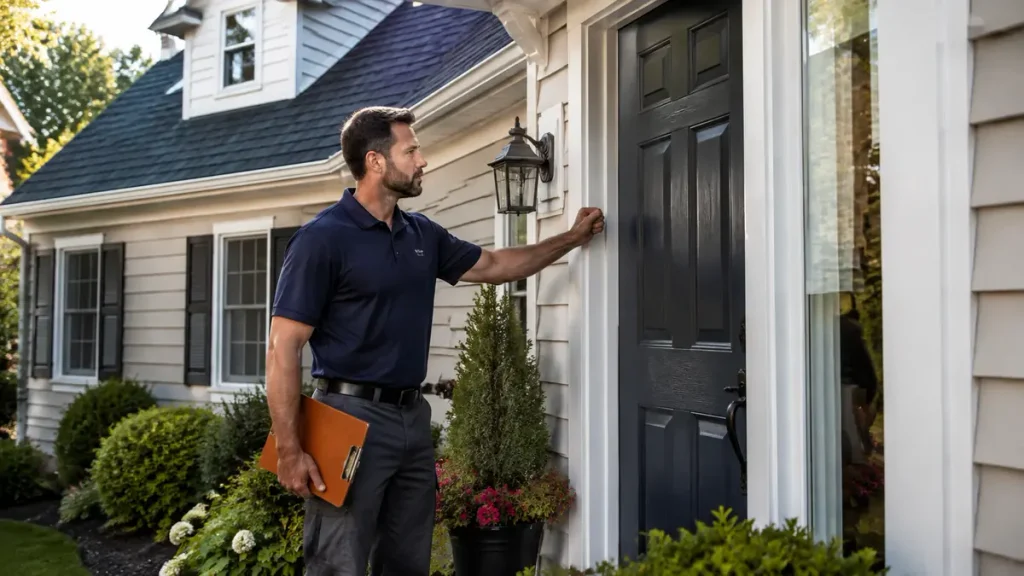
The first type of roofing lead is created when you approach the prospect.
This is direct sales.
Common examples include:
* Door-to-door roofing sales
* Cold calling homeowners
* Sending direct mail
* Emailing commercial property owners
* Canvassing storm-damaged neighborhoods
The prospect may not know there is a problem with their roof. They may not be searching for a roofing contractor, and they probably do not recognise your company.
You are finding the prospect and creating the opportunity.
Storm restoration roofing companies commonly build their businesses around this model. After a storm, their representatives inspect neighborhoods, knock on doors and educate homeowners about potential damage.
This method can generate roofing leads quickly, but it requires a strong sales team.
Your representatives must create awareness, establish trust and explain why the homeowner should take action. That is very different from speaking with someone who has already searched Google for a roofing contractor.
2. They Come to You
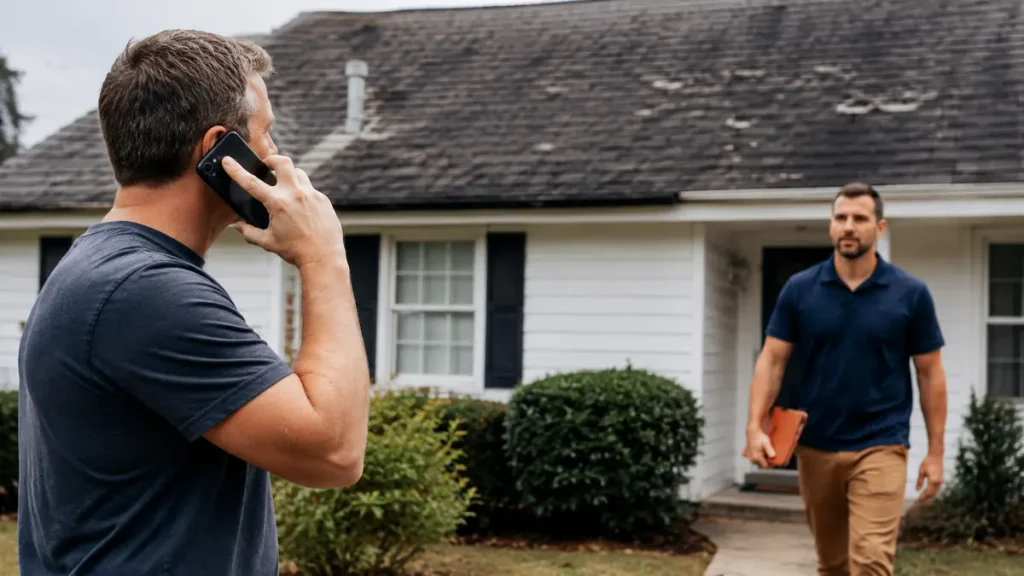
The second type of lead is created when prospects actively search for a roofing company and contact you.
These are inbound roofing leads.
They may find your company through:
* Google Search
* Local SEO
* Google Maps
* Google Local Services Ads
* Pay-per-click advertising
* Your website
* Your existing brand recognition
* Helpful roofing content
These prospects already know they have a problem.
They may have discovered a leak, noticed missing shingles or decided it is time to replace an ageing roof. The need already exists, and they are actively looking for a solution.
Because of that, the sales conversation is different.
You do not need to convince them that roofing services matter. Your job is to prove that your company is the safest and most valuable choice.
That is why your website, reviews, response time, estimate process and sales follow-up are so important. A prospect may contact several roofing contractors within minutes. The company that responds quickly and communicates clearly often wins.
3. They Are Introduced to You

The third way to generate roofing leads is through an introduction.
These are referral leads, and they generally fall into two categories.
The first is a customer referral. You replace someone’s roof, deliver an excellent experience and that customer recommends you to a neighbor, friend or family member.
The second is a referral from a center of influence.
This could include:
* Insurance agents
* Property managers
* Real estate professionals
* General contractors
* Home inspectors
* Restoration companies
* Local business owners
Referral leads are incredibly valuable because trust has already been transferred to your company.
When a trusted friend says, “Call this roofer—they did an excellent job for me,” much of the selling has already happened.
That is why referral leads usually close at a higher rate than cold prospects.
However, roofing salespeople who are accustomed to referrals can struggle with outbound sales. With a referral, brand trust and customer need already exist. With a cold prospect, the salesperson must create awareness, establish credibility and uncover the need.
They are completely different sales situations.
4. They Stumble Upon You
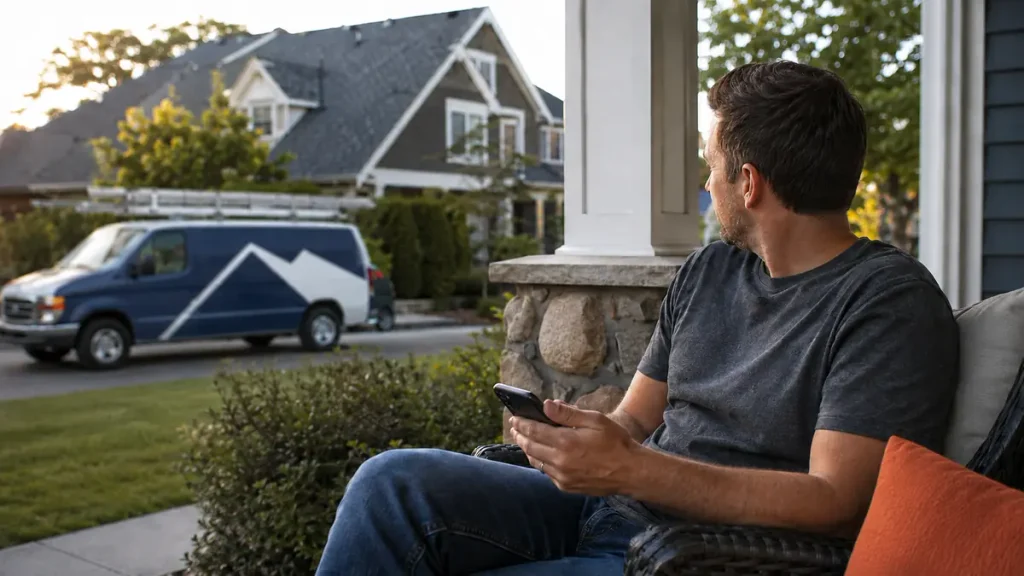
The fourth type of roofing lead comes from people who discover your company without actively searching for it.
Perhaps they see:
* One of your social media posts
* A roofing video on YouTube
* A Facebook or Instagram advertisement
* Your company vehicle
* A sponsorship at a local event
* A display advertisement inside a weather app
* A helpful post shared by someone they follow
Social media marketing for roofers usually fits into this category.
These prospects may know they have a roofing problem, but they are not necessarily ready to request an estimate. Some may simply remember your company when they need help later.
This can make social media valuable for awareness, but it can also become a dangerous place to waste money.
For example, a roofing company may be offered display advertising inside a local weather application for $2,000 per month. It sounds relevant because roofers depend on weather events, but relevance alone does not guarantee leads.
If the company cannot track calls, form submissions, appointments and revenue from that campaign, it may simply be throwing money at visibility and hoping something happens.
Hope is not a marketing strategy.
Match Your Sales Process to the Lead Source
One of the biggest mistakes roofing companies make is treating every lead the same.
A homeowner who opens the door to a roofing salesperson has a different level of awareness from someone searching “roof replacement company near me.”
Think about three important factors:
1. Does the prospect know there is a roofing problem?
2. Does the prospect currently feel a need to solve it?
3. Does the prospect know and trust your company?
A cold door-knocking prospect may score low in all three areas.
An inbound Google lead already understands the problem and feels the need, but may still be comparing your company with competitors.
A referral lead may already understand the problem, feel urgency and trust your company before speaking with you.
Your marketing message, appointment process and sales presentation should reflect these differences.
How to Stop Wasting Your Roofing Marketing Budget
Start by identifying which of the four lead generation categories currently produces the best results for your roofing company.
Then ask yourself how much you are spending on the other categories without receiving trackable revenue.
Cut the campaigns that consistently fail to produce results.
That does not mean you should depend on only one roofing lead source forever. Diversification matters, but you should expand with focus.
If your company is excellent at door knocking and wants to generate more inbound leads, do not divide a limited budget among SEO, Google Ads, social media, sponsorships, direct mail and five other experiments.
Choose one channel.
Track every lead, booked inspection, estimate, closed project and dollar of revenue. Improve the offer, targeting, landing page and follow-up process until you understand what works.
Once you crack that channel, move to the next one.
The strongest roofing companies are not necessarily active on every marketing platform. They understand their core strength, measure their results and expand one proven lead source at a time.
So, which type of roofing lead generation is your company already great at—and which one do you need to master next?